
No Honey, No Money!
- Sep 20, 2017
- 2 min read
Did you know one in three bites of food that we eat is derived from plants pollinated by bees? They are probably the most underrated and most efficient laborers in the world. Bees are responsible for pollinating over 80% of all flowering plants including 70 of the top 100 human food crops. And they know how to gather the most amount of pollen in the least amount of time. Wouldn't it be devastating to lose these excellent mathematicians! One of the biggest reasons to care about saving bees is that they make HONEY! Bees have been producing honey from flowering plants for millions of years. Honey is used for sweetening foods, medicinal purposes, and business purposes as forms of payment. $150 million of honey is produced every year in the United States. No honey, no money!
As major contributors to floral growth, bees provide nourishing habitats for animals like birds and insects and they beautify our earth. Many of the floral landscapes that we know and love in nature are made possible because of honey bee pollination. One single bee colony can pollinate 300 million flowers each day. According to the USDA, bees pollinate about 75% of fruits, nuts, and vegetables grown in the US. Almonds are totally dependent on bee pollination and avocados, kiwis, apples, cucumbers, and cherries are majorly dependent on bee pollination. These tiny buzzing creatures are amazing!
So what's the problem? About 60 years ago there were 6 million honey bee hives in the US. Today they are down to half that size. Experts believe honey bees are dying from pesticides. About 30% of 77 million acres of soybean crop use seeds coated in pesticides. Also, rising growth rates of mites, viruses, and fungi harm bee colonies. Some speculate that the increased radiation given off by electronic devices could interfere with the bees’ ability to navigate. Environmental stressors such as little access to real nutrition and clean water as well as lack of diverse nectar are contributing to bee mortality.
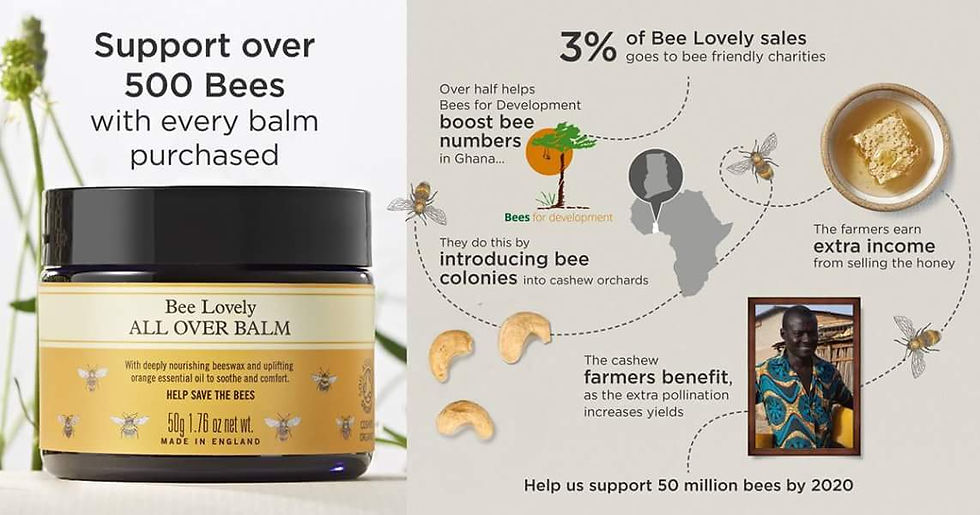
How can we help? Be a smart shopper and choose food items you know come from healthy places. Don't spray pesticides in your yard and encourage those around you to do the same. Plant a mix of pollinator flowers in various colors, bloom seasons and shapes. Buy lots of honey from your local farmers! Honey is also used in skin products with wondrous effects. Visit this campaign to see how you can help save our precious bees as well as benefit from some healing and nourishing skin balms.


Comments